
Choosing between a diploma and a degree is one of the most important decisions students make after completing school. Many students wonder, “Diploma vs Degree: Which Is Better?” The answer depends on your career goals, interests, budget, and the amount of time you want to invest in your education.
Both diploma and degree programs offer valuable learning opportunities and career prospects. However, they differ in terms of course duration, curriculum, specialization, job opportunities, and higher education options. Understanding these differences will help you make an informed decision.
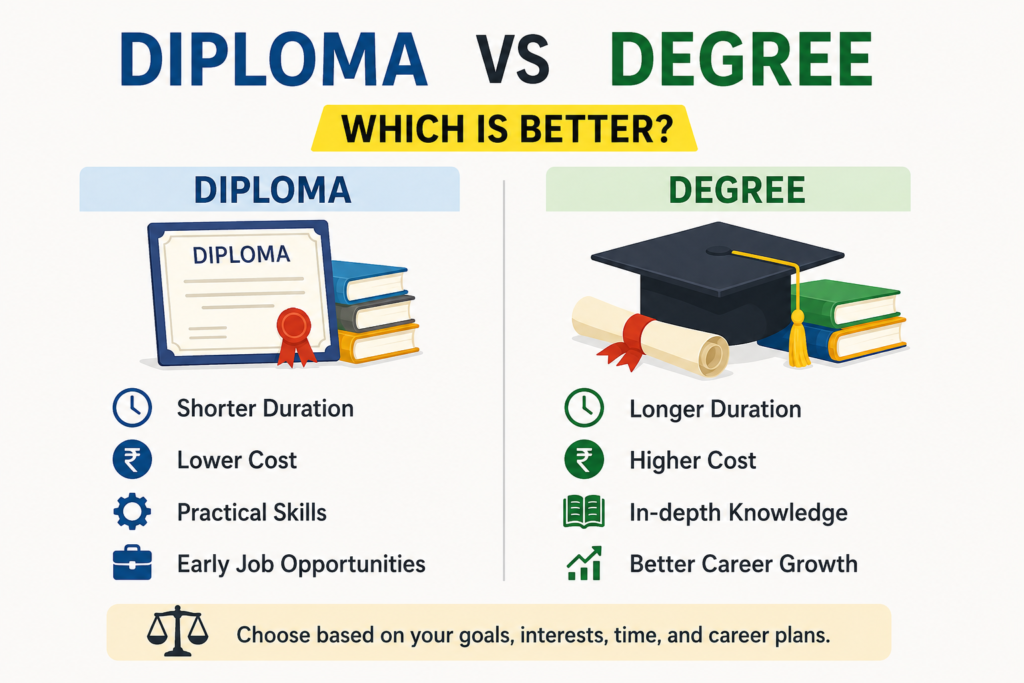
What Is a Diploma?
A diploma is a short-term educational program designed to provide practical knowledge and job-specific skills. Diploma courses are offered by polytechnic colleges, technical institutes, and vocational training centers.
Most diploma programs focus on hands-on learning, allowing students to enter the workforce quickly. Depending on the field of study, diploma courses usually last between one and three years.
Advantages of a Diploma
- Shorter course duration
- Lower tuition fees
- Practical skill-based training
- Early employment opportunities
- Suitable for technical and vocational careers
Diploma programs are ideal for students who want to gain industry-specific skills and start earning sooner.
What Is a Degree?
A degree is a comprehensive academic qualification offered by universities and colleges. Degree programs combine theoretical knowledge, practical learning, research, and critical thinking skills.
Bachelor’s degree courses generally take three to four years to complete, depending on the program and country.
Advantages of a Degree
- In-depth academic knowledge
- Better career growth opportunities
- Higher earning potential
- Eligibility for postgraduate studies
- Recognition by employers worldwide
A degree is often preferred for professional careers in engineering, medicine, management, education, law, and many corporate sectors.
Diploma vs Degree: Key Differences
1. Course Duration
One of the biggest differences in the Diploma vs Degree: Which Is Better? comparison is the duration.
- Diploma: Usually 1–3 years
- Degree: Usually 3–4 years
Students looking for faster employment often choose diploma courses.
2. Course Structure
Diploma programs focus mainly on practical skills and industry training.
Degree programs include:
- Theory
- Practical sessions
- Projects
- Internships
- Research
- Soft skills development
This broader curriculum prepares students for long-term career growth.
3. Career Opportunities
Diploma holders often find employment quickly in technical industries, manufacturing, healthcare, hospitality, and IT support.
Degree graduates usually qualify for:
- Corporate jobs
- Government positions
- Management roles
- Research careers
- Professional services
For senior-level positions, employers often prefer degree holders.
4. Salary Potential
Salary depends on your skills, experience, industry, and location.
Generally:
- Diploma holders receive competitive entry-level salaries.
- Degree holders often have higher long-term earning potential due to better promotion opportunities.
This is an important consideration when evaluating Diploma vs Degree: Which Is Better?
5. Higher Education
A degree provides direct eligibility for:
- Master’s programs
- MBA
- Professional certifications
- Doctoral studies
Diploma holders may need additional qualifications before pursuing higher education.
Who Should Choose a Diploma?
A diploma is suitable if you:
- Want to start working quickly
- Prefer practical learning
- Have budget constraints
- Want technical or vocational skills
- Plan to gain work experience early
Fields such as mechanical engineering, electrical engineering, hotel management, animation, graphic design, and healthcare offer excellent diploma programs.
Who Should Choose a Degree?
A degree is a better option if you:
- Want long-term career growth
- Plan to pursue higher education
- Aim for management positions
- Want better promotion opportunities
- Are interested in research or professional careers
Degree programs provide greater flexibility across industries and professions.
Diploma vs Degree: Which Is Better for Your Career?
The answer depends on your career goals.
Choose a diploma if your priority is:
- Quick employment
- Affordable education
- Practical job skills
- Technical expertise
Choose a degree if your priority is:
- Higher salary
- Career advancement
- Leadership roles
- Postgraduate education
- Long-term professional growth
Both qualifications can lead to successful careers when combined with dedication, continuous learning, and practical experience.
Tips for Choosing Between a Diploma and a Degree
Before making your decision:
- Identify your career goals.
- Compare course duration and costs.
- Research job opportunities.
- Check industry demand.
- Consider future education plans.
- Evaluate placement records of institutions.
- Choose an accredited college or university.
Making the right choice today can positively impact your future career.
Conclusion
When deciding Diploma vs Degree: Which Is Better?, there is no one-size-fits-all answer. The right choice depends on your career goals, interests, budget, and future plans. A diploma offers practical skills, faster entry into the workforce, and affordable education, making it ideal for students seeking immediate employment. On the other hand, a degree provides comprehensive academic knowledge, greater career flexibility, higher earning potential, and opportunities for advanced studies.
If you’re still wondering Diploma vs Degree: Which Is Better?, consider your long-term career aspirations and the qualifications required in your chosen industry. Both options have their own advantages, and understanding Diploma vs Degree: Which Is Better? will help you make a confident and informed decision. Whether you choose a diploma or a degree, success ultimately depends on your dedication, continuous learning, and practical experience. By carefully evaluating Diploma vs Degree: Which Is Better?, you can select the educational path that best supports your personal and professional growth.